
The best requirements management you've ever had.
Intuitive to use
Reliable in results
Efficient in processes

Introducing RM Software with a Pilot Project
2026-02-19
6
minutes reading time

Why getting started with RM software often feels difficult
Many organizations approach the introduction of RM software with high expectations. The tool is expected to bring order, create transparency, and solve problems that may have built up over years. At the same time, it is often unclear what requirements management should actually look and feel like in their own context, professionally, organizationally, and in the day-to-day work of those involved.
Another important aspect: requirements management already exists, even without a tool. Requirements emerge in meetings, presentations, tickets, or spreadsheets. The real challenge is not “starting it”, but running it in a systematic, transparent, and collaborative way.
If, at this point, a company rolls out a tool across the entire organization or attempts to transform everything at once, the result is often overload, resistance, and disappointment. That is precisely why a pilot is the better starting point.
One pilot, two aspects
An effective pilot consists of two clearly distinguishable but closely interconnected elements: the selected pilot project in the company and the RM software, which will be examined in more detail.
Testing requirements management in practice
From the company’s perspective, a pilot project means selecting a real but deliberately limited initiative in which requirements management is applied in a structured way for the first time. This is not an artificial training exercise, but a real project with real requirements, stakeholders, and conflicting objectives.
The goal is not perfection. The goal is to gain experience.
How clearly can requirements actually be formulated? Which roles are truly needed? Where is information missing? How time-consuming is coordination? Which structures genuinely provide value?
Such a pilot creates a protected environment in which new ways of working can be tried out, questioned, and adjusted, without the pressure of having to be “right” across the entire organization from day one. At the same time, it generates reliable insights for future decisions.
Testing RM software under real conditions
In parallel, a software pilot is required. This differs fundamentally from a traditional demo or an isolated trial instance. A software pilot means that the RM software is used within the real project context, with real requirements, real users, and the same level of support that would apply in a later full implementation.
Two aspects are essential: the pilot is time-limited and deliberately outcome-open. It is intended to show how well the tool, the method, and the organization actually fit together.
Which features are used? Where does friction arise? What adjustments are necessary — in the tool and in the way of working?
For the company, this creates a realistic picture of everyday work with the software. For the vendor, it becomes visible how the solution performs under real conditions. Both sides gain transparency, and that is exactly what makes the pilot valuable.
Why both aspects belong together
A pilot unfolds its full benefit only when the selected project and the software pilot are considered together.
If a project is piloted but the tool is used only superficially, unrealistic expectations arise and there is no practical routine later on. Conversely, if the software is tested without a real project as its foundation, the benefit remains theoretical and disconnected from daily work.
Only when real requirements, real stakeholders, and the tool are viewed in interaction can well-founded statements be made about effort, benefit, acceptance, and scalability.
What a good pilot must deliver
A pilot that is successful on both levels is manageable, representative, and clearly structured. It includes enough complexity to provide realistic insights, yet remains controllable.
Key success factors are a stable, interdisciplinary team, clearly defined roles, and regularly scheduled time for coordination, feedback, and reflection.
Equally important is an appropriate framework: too much predefined structure suppresses learning, too little structure leads to chaos. The pilot should allow both the method and the tool to evolve together.
The pilot as a full introduction — with a fair exit option
A pilot is often seen as a preliminary phase that one “goes through” before later deciding whether and how to continue. In practice, this understanding falls short.
A professionally designed software pilot is not a reduced introduction. It is carried out with the same care, depth, and commitment as a regular RM implementation: with a real project, real users, clearly defined roles, methodological rigor, and full support.
The decisive difference lies not in quality, but in the binding nature of the decision.
The pilot creates a framework in which organizations can experience requirements management and RM software in real terms, without having to commit long term from the outset. It provides a clean exit option in case it becomes clear that timing, organizational readiness, or the chosen approach does not yet fit.
In practice, this means that if the pilot works, which is the typical case, the transition is seamless. There is no second introduction, no rebuilding of structures, and no “back to square one”. The pilot simply becomes the first phase of the actual rollout.
This combination of full-value implementation and decision flexibility is what makes the pilot so powerful: it removes risk from the introduction without sacrificing depth, quality, or sustainability.
Conclusion: start fully — with the security of a pilot
The introduction of RM software is neither purely a tool decision nor purely an organizational matter. It changes ways of working, coordination, and decision-making processes, and it must prove itself in real project practice.
An pilot project provides the professional and organizational framework: requirements management is applied in a structured and collaborative way within a real project. A software pilot ensures that the tool is used under real conditions, with the same depth, care, and support as in a regular implementation.
Together, they enable a start that is fully executed but not prematurely locked in. The pilot is not a trial run, but the first phase of the introduction, with the security of being able to exit if necessary.
Anyone looking to introduce RM software should therefore not “start small”, but start realistically: with a pilot that delivers real results, transitions seamlessly into broader adoption, and reduces risk without compromising quality.
{{inline-cta}}
About the author

Johanna Lotter
Onboarding Manager
Johanna Lotter has been part of the onboarding team at OSSENO Software GmbH for about four years. As an onboarding manager, she helps businesses integrate reqSuite® rm seamlessly into their workflows. With her in-depth expertise and keen attention to detail, she has already supported numerous companies from various industries in establishing a clear and effective requirements structure. Her goal: to help businesses capture their requirements in a structured and practical way from the start, enabling them to work more efficiently in the long run.
Other interesting articles
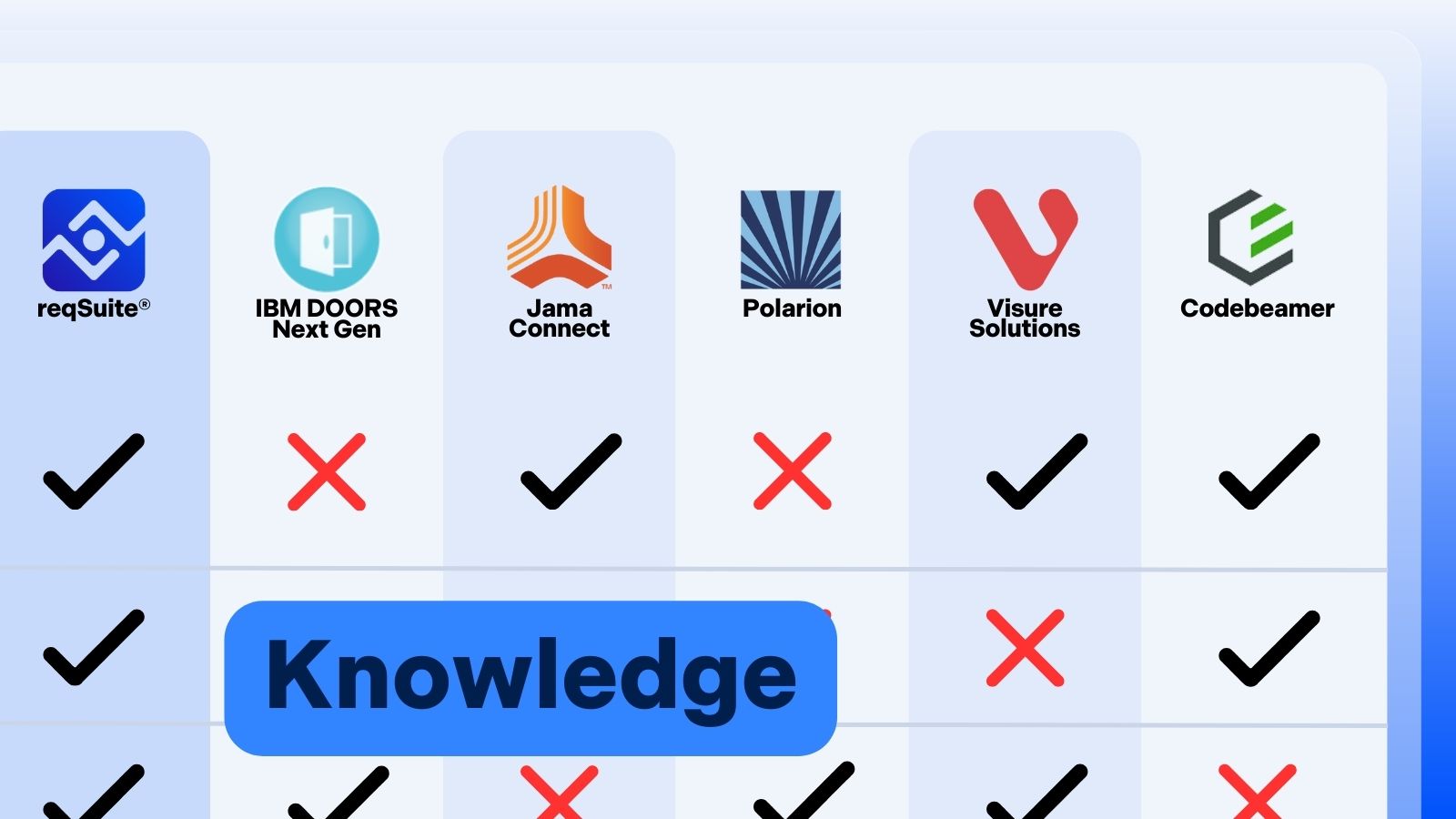
Knowledge
10
minutes reading time
Requirements Management Tools 2026: A Comparison for Medium Sized Product Developers

Neele Borkowsky
2025-12-08

Tips
10
minutes reading time
Why Jira Is Not a Requirements Management Tool

Dr. Sebastian Adam
2025-03-07

Tips
12
minutes reading time
How to Choose the Right Requirements Management Tool
Dr. Sebastian Adam
2024-08-17

Tips
7
min. reading time
reqSuite® rm vs. Excel in Requirements Management
Dr. Sebastian Adam
2026-09-17

Company
5
min. reading time
reqSuite® rm - Workshops on Practical Topics
Neele Borkowsky
2026-07-21

Company
4
min. reading time
REalTalk: Plain Talk in Requirements Engineering
Dr. Sebastian Adam
2026-06-10
